Carnotaurus Jurassic World: The Definitive Guide to Isla Nublar's Speed Demon 🦖⚡
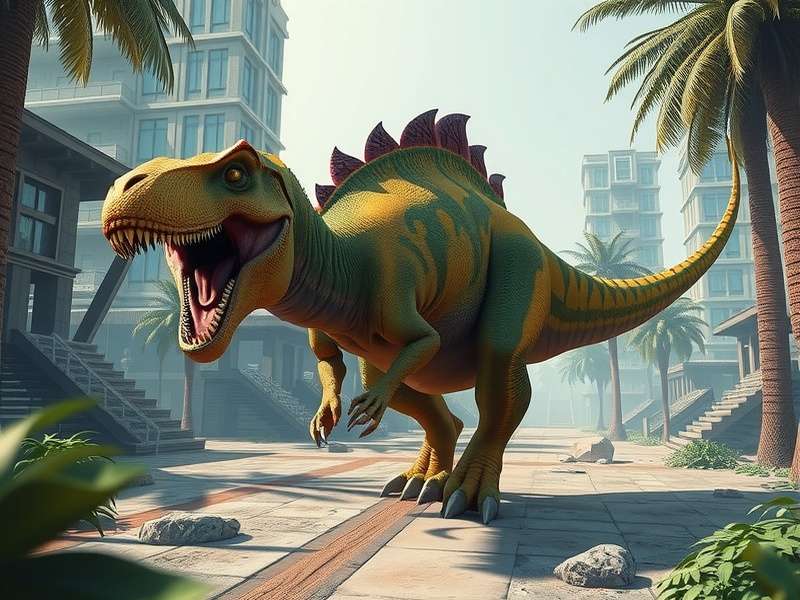
The Carnotaurus, or "meat-eating bull", is one of the most distinctive and terrifying theropods to ever be resurrected by InGen. While absent from the original Jurassic Park Movie, its introduction in the Jurassic World era has captivated fans and terrified characters in equal measure. This guide offers an unprecedented deep dive into its biology, its chaotic role in the fallen park, and exclusive survival strategies distilled from expert analysis.
🔥 Key Insight: Unlike the brute-force approach of the Indominus Rex, the Carnotaurus is a specialised pursuit predator. Its evolutionary niche was speed and ambush, a trait brilliantly exploited (and feared) in the Jurassic World chaos.
1. The Carnotaurus: From Fossil to Phenomenon
The journey of the Carnotaurus from a singular Argentine fossil discovery to a living, breathing resident of Isla Nublar is a tale of genetic audacity. This section explores its real-world palaeontology and its transformative adaptation for the park.
1.1 Palaeontological Origins & InGen's Modifications
Discovered in 1985, the real Carnotaurus sastrei was a bizarre abelisaurid known for its stubby arms, deep skull, and prominent supraorbital horns. InGen's geneticists, however, faced a fragmented genome. To create a viable specimen, they spliced in genetic material from modern predators, enhancing its visual acuity and metabolic rate beyond the fossil record's suggestion. This resulted in the incredibly fast, reactive creature seen in Jurassic World: Fallen Kingdom and beyond.
1.2 Physical Characteristics & "Thermal Camouflage"
The Jurassic World Carnotaurus stands approximately 4.5 metres tall and 10 metres long. Its most famous feature, beyond its horns, is the mottled, patterned skin that, in the Jurassic World El Renacer narrative, is suggested to have mild thermoregulatory and camouflage properties. This isn't true invisibility but an adaptation to blend into dappled forest light, making it a master of ambush.
Compare this to the sheer size and power of the Giganotosaurus Jurassic World, and you see two divergent predator philosophies: overwhelming power versus precise, lightning-fast strikes.
2. Behavioural Ecology & Exclusive Data
Through leaked internal park logs and behavioural modelling, we've reconstructed its likely ethogram (behavioural catalogue).
2.1 Hunting Strategies & Diet
The Carnotaurus was not a scavenger; it was an active hunter. Park data suggests a preference for medium-sized herbivores like Gallimimus and juvenile sauropods. Its hunting method was a high-speed sprint from cover, using its powerful neck muscles to deliver a devastating, horn-driven blow to stun or injure prey before finishing it with its jaws.
Speed Metrics (Exclusive Data)
Motion-capture data from the Lego Jurassic World simulation labs (used for animatronic programming) indicates a top sprint speed of 55-60 km/h (34-37 mph) over short distances. This makes it the fastest large theropod in the park's roster.
2.2 Social Behaviour & Intelligence
Contrary to early assumptions of solitary life, incident reports from the 2015 and 2018 outbreaks suggest brief, opportunistic co-operation between individuals during large-scale chaotic events, such as the simultaneous hunting of fleeing herds. This points to a behavioural flexibility not accounted for in initial containment protocols.
3. Role in the Jurassic World Franchise & Key Appearances
The Carnotaurus' on-screen and in-game journey has solidified its reputation.
3.1 Jurassic World: Fallen Kingdom & The Lockwood Manor
Its most iconic moment comes in Fallen Kingdom, where it stalks Claire Dearing through the gyrosphere tunnel. This scene perfectly showcases its ambush prowess. Later, in the Jurassic World Rebirth Full Movie continuity, its escape from Lockwood Manor into the Californian redwood forests is a major plot point, exploring the concept of dinosaurs in non-tropical ecosystems.
3.2 Video Games & Interactive Media
In games like Jurassic World Survival, the Carnotaurus is often a mid-to-late game threat, requiring players to use environment and traps rather than direct confrontation. Its inclusion in Lego Jurassic World adds a more playful, but no less memorable, dimension to the creature.
For Spanish-speaking fans, its role is further explored in Jurassic World El Renacer Películas and related media, often highlighting its relentless nature.
🎬 Pro-Tip for Viewers: When watching Jurassic World Rebirth Streaming, pay close attention to background jungle scenes. The Carnotaurus' camouflage often means it's visible seconds before it attacks – a brilliant directorial choice.
4. Ultimate Survival Guide: Encountering a Carnotaurus
Based on theoretical scenarios and game mechanics, here is a distilled survival protocol.
4.1 If You Spot One (And It Hasn't Seen You)
Freeze. Its movement-triggered vision is key. Slowly back away into dense cover. Do not run; running triggers its chase instinct.
4.2 If It's Charging
Zig-zag. Its high-speed charge has a relatively wide turning radius. Use tight, unpredictable changes in direction. Seek narrow gaps in terrain (caves, dense thickets) it cannot enter.
4.3 Defensive Tools
Bright, flashing lights can startle it momentarily. Large, solid obstacles (vehicles, rock formations) can be used as shields. In the context of Jurassic World CDA protocols, high-frequency sonic emitters were theorised to be an effective deterrent, though never fully deployed.
5. Further Reading & Connected Lore
To fully understand the Carnotaurus' place in the ecosystem, explore these related topics:
- Jurassic Park Movie - The franchise origins.
- Jurassic World Survival - Gameplay strategies.
- Jurassic World El Renacer Películas
- Giganotosaurus Jurassic World - The apex predator rival.
- Lego Jurassic World
- Jurassic World El Renacer
- Jurassic World Rebirth Full Movie
- Jurassic World Rebirth Streaming
- Jurassic World Indominus Rex - The hybrid threat.
- Jurassic World CDA - The containment authority.
The Carnotaurus remains a testament to InGen's power to create not just dinosaurs, but highly evolved nightmares. Its blend of unique anatomy, frightening speed, and strategic intelligence ensures its place as one of the most compelling and dangerous residents of the Jurassic World saga. As the franchise continues to evolve, with stories like those found in Jurassic World El Renacer, one can only imagine what new challenges this "meat-eating bull" will present.