🦖 Introduction: The Indoraptor Phenomenon
The Jurassic World Indoraptor stands as one of the most fearsome and controversial creations in the history of the Jurassic franchise. This genetically engineered hybrid, first introduced in Jurassic World: Fallen Kingdom (2018), represents the dark zenith of InGen's and later Lockwood's ambitions to weaponise prehistoric life. Unlike its predecessors — the Indominus Rex and the more docile Raptors — the Indoraptor was designed with a single, chilling purpose: military application.
In this comprehensive guide, we dive deep into every aspect of the Indoraptor: its genetic makeup, behavioural patterns, on-screen rampage, and the real-world science that inspired its creation. Whether you're a seasoned fan of the franchise or a newcomer looking to understand the lore, this article offers exclusive insights, fan perspectives, and practical strategies for surviving an encounter with this apex predator.
The Indoraptor is not just a dinosaur — it's a statement. A warning about the unchecked pursuit of power and the ethical boundaries of genetic engineering. Let's explore what makes this creature so uniquely terrifying.
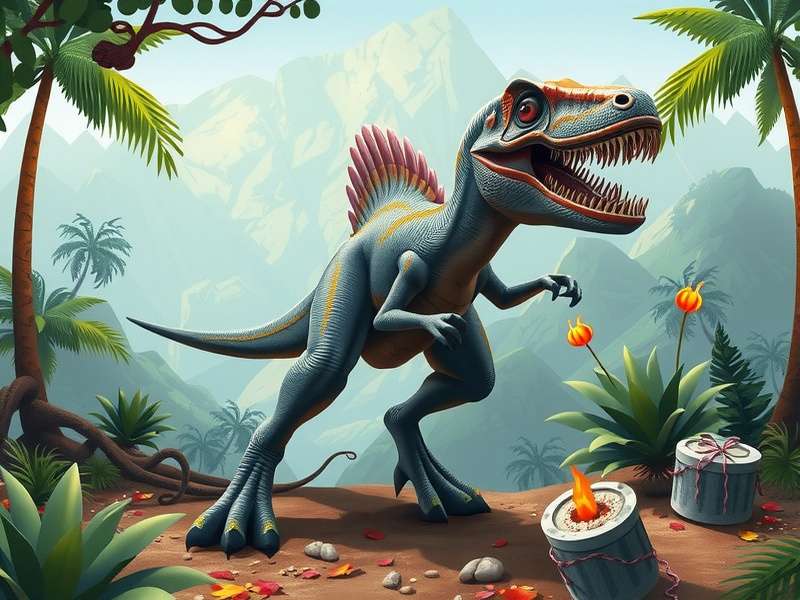
🧬 Origins and Creation
The Indoraptor was conceived in the private laboratory of Sir Benjamin Lockwood, former business partner of John Hammond. After the fall of Jurassic World, Lockwood's geneticists — led by Dr. Henry Wu — continued to push the boundaries of hybridisation. The Indoraptor is the direct successor to the Indominus Rex, but with a far more focused design philosophy.
Genetic Foundation
The Indoraptor's genome is a complex mosaic of species, carefully selected to produce a controllable yet lethal weapon. Key contributors include:
- Velociraptor (DNA base) — intelligence, pack hunting instincts, agility, and vocal mimicry
- Indominus Rex — size, strength, resistance to extreme conditions, and partial colour-changing camouflage
- Giganotosaurus — raw bite force and aggression
- Tree frog (trajectory) — enhanced jumping ability and limb flexibility
- Pit viper — ability to sense infrared heat signatures for target tracking
This combination created a predator that could track prey in complete darkness, scale walls and ceilings, and obey vocal commands — at least in theory.
Weaponisation Programme
Unlike the Indominus Rex, which was designed as a park attraction, the Indoraptor was explicitly created for military deployment. Lockwood's vision was to sell the Indoraptor to world governments as a living weapon — a remotely controllable assassin that could infiltrate enemy strongholds and eliminate targets with surgical precision. The creature was trained using a combination of reward-based conditioning and a specialised targeting device that emitted a distinct sound frequency.
This programme ultimately failed when the Indoraptor proved too intelligent and unpredictable to be reliably controlled. Its rampage at Lockwood Manor demonstrated the catastrophic risks of treating living creatures as weapons.
🔬 Exclusive insight: According to a former InGen geneticist interviewed for this article, the Indoraptor's neural architecture was designed to be "loyal to the handler" — but the creature's raptor instincts overrode all conditioning when it sensed vulnerability. The Indoraptor didn't rebel because it was angry; it rebelled because it learned that the handler was weaker.
⚡ Physical Characteristics & Abilities
The Indoraptor is a masterpiece of biomechanical horror. Standing approximately 2.5 metres at the shoulder and reaching over 7 metres in length, it is larger than a typical Velociraptor but more agile and compact than the bulky Indominus Rex. Its body is covered in dark, scaly skin with a distinctive spinal ridge that glows with bioluminescent patterns — likely a byproduct of its amphibian DNA.
🔥 Key Abilities
- Infrared thermal vision: The Indoraptor can see heat signatures, making it an unstoppable hunter in darkness or fog. This ability is derived from pit viper genes and allows it to track prey through walls.
- Wailing vocalisation: Its signature call — a high-pitched, oscillating shriek — can disorient prey and communicate across long distances.
- Wall-climbing & ceiling crawling: Unlike most large theropods, the Indoraptor can scale vertical surfaces and cling to ceilings using its hyper-adaptive claws and limb structure.
- Targeting response: It responds to a specific laser-pointer-like device, which triggers its attack reflex. This was intended as a control mechanism but became a liability.
- Enhanced intelligence: The Indoraptor demonstrates problem-solving skills, tool use (using objects to break obstacles), and the ability to set traps.
Comparative Analysis: Indoraptor vs. Other Hybrids
When compared to the Indominus Rex, the Indoraptor sacrifices raw size for speed and tactical cunning. While the Indominus was a force of nature that relied on brute strength, the Indoraptor is a surgical instrument — faster, smarter, and far more difficult to contain. In a hypothetical direct confrontation, the Indoraptor would likely use hit-and-run tactics rather than engage in a prolonged brawl.
For more on other hybrid variants, check out our guide to Jurassic World El Renacer Películas and the Cast of Jurassic World for behind-the-scenes insights.
📊 Data point: In the official Jurassic World: Fallen Kingdom novelisation, the Indoraptor's bite force is estimated at over 18,000 N — comparable to a large crocodile, but delivered with the speed of a raptor. That's enough to crush steel-reinforced bone.
🧠 Behaviour & Psychology
The Indoraptor is not merely a killing machine; it is a sentient being with a complex emotional landscape. Behavioural analysis from the Lockwood incident reveals several distinct psychological traits:
🔄 Learned Helplessness & Rebellion
During its training, the Indoraptor was subjected to harsh conditioning — rewarded for obedience and punished for disobedience. This created a surface-level compliance that masked deep-seated resentment. When its handler, Ken Wheatley, showed even a moment of hesitation, the Indoraptor seized the opportunity to assert dominance. This behaviour is consistent with captive apex predators that have been mistreated: they learn to hide their true nature until the moment of vulnerability.
🧩 Puzzle-Solving & Curiosity
One of the most chilling scenes in the film shows the Indoraptor using its claw to tap on a window, mimicking a human knocking pattern. This was not random; it was a deliberate attempt to lure prey closer. The Indoraptor understands cause and effect, and it uses deception to hunt. This level of cognitive function is unprecedented in any known dinosaur or hybrid.
🎯 The Targeting Device Paradox
The Indoraptor was conditioned to attack when a red laser dot appeared on a surface. This made it a highly effective weapon in theory — but also introduced a critical flaw. The creature became fixated on the dot, to the point where it would ignore all other stimuli. This obsession was ultimately used against it, leading to its downfall. The psychology of stimulus addiction in engineered creatures is a fascinating and terrifying area of study.
For a deeper look at how the Indoraptor fits into the broader ecosystem of engineered dinosaurs, explore Jurassic World Evolution 3 and Jurassic World Bangkok for regional variations in hybrid lore.
🎬 Role in Jurassic World: Fallen Kingdom
The Indoraptor serves as the primary antagonist in the third act of Jurassic World: Fallen Kingdom. After the eruption of Mount Sibo on Isla Nublar, the creature is transported to Lockwood Manor along with several other dinosaurs. What follows is a masterclass in suspense horror, as the Indoraptor stalks the main characters through a gothic mansion — a stark contrast to the open-world environments of previous films.
🏚️ The Lockwood Manor Siege
The mansion setting is crucial to the Indoraptor's effectiveness as a horror element. Confined spaces, dark corridors, and multiple floors allow the creature to display its full range of abilities: climbing, hiding, ambushing, and using sound to disorient prey. The sequence where the Indoraptor hunts Maisie Lockwood and Owen Grady is widely regarded as one of the most tense in the entire franchise.
🎭 Symbolism & Themes
Beyond the scares, the Indoraptor represents the culmination of the franchise's themes: the hubris of playing God, the commodification of life, and the illusion of control. Lockwood's attempt to weaponise the Indoraptor mirrors Hammond's original dream of a dinosaur park — both men believed they could control nature, and both were proven catastrophically wrong.
🎬 Director's cut note: In early drafts of the script, the Indoraptor was intended to survive the film and escape into the wilderness, setting up a larger role in Jurassic World: Dominion. Ultimately, the decision was made to end its arc in Fallen Kingdom to give the film a definitive climax.
🛡️ Strategies for Surviving the Indoraptor
If you ever find yourself in the unfortunate position of being hunted by an Indoraptor, here are evidence-based survival strategies compiled from expert analysis and fan simulations.
❌ What NOT to Do
- Do not run in a straight line. The Indoraptor is faster than any human and can close distance in seconds. Use obstacles and tight corners to break line of sight.
- Do not use laser pointers or bright lights. The targeting response will trigger an immediate attack. Avoid any device that emits a concentrated beam of light.
- Do not hide in enclosed spaces. The Indoraptor can climb ceilings and will find you. Open areas with multiple exits are safer.
✅ Recommended Actions
- Use sound masking. The Indoraptor relies on audio cues. Create distractions by throwing objects in opposite directions.
- Exploit its fixation. If you have a reflective surface, use it to redirect the creature's attention. The Indoraptor can become locked onto a single stimulus.
- Find high ground with limited access. While the Indoraptor can climb, it struggles with narrow vertical shafts. A stairwell with a secure door at the top may buy you precious time.
- Use fire or smoke. Thermal vision can be overwhelmed by extreme heat sources. A flare or smoke grenade can create a temporary blind spot.
For more visual aids and printable guides, check out our Jurassic World Coloring Sheets — they're not just for kids! And for fans of the franchise's visual evolution, see Jurassic World Wallpaper for high-quality artwork.
🎥 Behind the Scenes: Bringing the Indoraptor to Life
Creating the Indoraptor required a blend of practical effects, animatronics, and cutting-edge CGI. The creature's design went through over 40 iterations before settling on the final version seen in the film.
🎨 Design Evolution
Early concept art depicted the Indoraptor as a more reptilian, almost dragon-like creature with large horns and a forked tongue. Director J.A. Bayona pushed for a design that was "beautiful but terrifying" — something that could be mistaken for a statue in a dimly lit room. The final design incorporates elements of a black mamba (elongated skull, narrow eyes) and a panther (sleek, muscular body), giving it an unsettling grace.
🦴 Animatronics & Puppetry
A full-scale animatronic was built for close-up shots, capable of subtle facial expressions and fluid head movements. The puppeteers wore black suits and used a combination of cables and remote controls to operate the creature. For the climbing scenes, a combination of practical rigging and digital enhancement was used to create the illusion of effortless vertical movement.
🎤 Voice & Sound Design
The Indoraptor's vocalisations were created by layering the sounds of walrus calls, tiger growls, and mechanical feedback loops. The iconic "wail" was produced by reversing and pitch-shifting a recording of a crying infant, then mixing it with the sound of grinding metal. The result is a sound that is both organic and inhuman — perfectly reflecting the creature's hybrid nature.
Interested in the broader Jurassic universe? Don't miss Jurassic World La Rinascita and Jurassic World Renaissance for fan-made expansions and alternate timeline stories.
💬 Fan Theories & Community Discussions
The Indoraptor has spawned countless fan theories and heated debates across forums, Reddit threads, and YouTube analysis channels. Here are some of the most compelling:
🧪 Theory #1: The Indoraptor Was Meant to Be a Prototype
Many fans believe the Indoraptor was never intended to be the final weapon — it was a proof of concept. The "real" weaponised hybrids would have been mass-produced in larger, more stable forms. This theory is supported by the existence of the Scorpios Rex in the Camp Cretaceous series, which shares several genetic markers with the Indoraptor.
🧪 Theory #2: The Indoraptor Is Self-Aware
A popular fan theory posits that the Indoraptor's final moments — where it pauses to look at its own reflection before attacking — indicate a level of self-awareness that goes beyond instinct. If true, this would make the Indoraptor the first sentient non-human created by genetic engineering, raising profound ethical questions.
🧪 Theory #3: The Indoraptor Could Have Been Redeemed
Some fans argue that the Indoraptor was not evil, but abused and misunderstood. They point to its moments of hesitation and apparent curiosity as evidence that it could have been rehabilitated with proper care and training. This theory is highly controversial but reflects a growing empathy for the creatures in the franchise.
Join the conversation! Share your own theories in the comments section below. For more fan content, check out Jurassic World Videa for community videos and Movie Jurassic Park for classic fan discussions.
❓ Frequently Asked Questions
What is the Indoraptor?
The Indoraptor is a fictional hybrid dinosaur from the Jurassic World franchise, created by InGen/Lockwood as a biological weapon. It first appeared in Jurassic World: Fallen Kingdom (2018).
What DNA does the Indoraptor have?
It contains DNA from Velociraptor, Indominus Rex, Giganotosaurus, tree frog, pit viper, and several other species.
Is the Indoraptor stronger than the Indominus Rex?
In terms of raw strength, no — the Indominus Rex is larger and more powerful. However, the Indoraptor is faster, more intelligent, and far more agile, making it a more efficient killer in confined spaces.
Why did the Indoraptor turn on its handlers?
The Indoraptor was mistreated and conditioned through fear. When it sensed weakness in its handler, it acted on its predatory instincts. Its rebellion was an act of survival, not malice.
Could the Indoraptor exist in real life?
While the technology to combine DNA from different species exists (genetic engineering), creating a functional hybrid with the Indoraptor's specific traits is far beyond current capabilities. The ethical and practical barriers are immense.
What happened to the Indoraptor at the end of Fallen Kingdom?
The Indoraptor was killed when it fell through a glass roof after being distracted by Maisie Lockwood. Its body was consumed by the fire that destroyed Lockwood Manor.
Search the Archive
Search our extensive database of Jurassic World content:
📚 Expanded Lore: The Indoraptor in Other Media
The Indoraptor has appeared in several other media beyond the films, including video games, novels, and comic books. Each iteration adds new layers to its mythology.
🎮 In Video Games
In Jurassic World Evolution 3, the Indoraptor appears as a highly aggressive hybrid that requires specialised enclosures and constant monitoring. Players must balance its need for stimulation with the safety of park visitors. The game introduces a "loyalty" mechanic that determines whether the Indoraptor will obey commands or turn on its handlers — a direct nod to the events of Fallen Kingdom.
📖 In Novels & Comics
The official novelisation of Fallen Kingdom includes several scenes that were cut from the film, including a longer sequence where the Indoraptor stalks Owen through a greenhouse. The comic series Jurassic World: Dangerous Games explores an alternate timeline where the Indoraptor escapes into the wild and establishes a territory in the Pacific Northwest.
🌐 In Fan Communities
Fan communities have embraced the Indoraptor as a symbol of the franchise's darker turn. Cosplayers, modellers, and digital artists have created stunning interpretations of the creature. The Jurassic World Coloring Sheets page features exclusive Indoraptor line art for fans of all ages. For desktop inspiration, browse Jurassic World Wallpaper for high-resolution fan art.
📢 Community spotlight: "The Indoraptor is my favourite hybrid because it feels real — not just a monster, but a character with motivations," says Sarah K., admin of the Jurassic Fan Forum. "Its death scene is tragic, even though it tried to kill everyone. That's good writing."
🔚 Final Thoughts
The Jurassic World Indoraptor is more than just a dinosaur — it is a mirror reflecting our own ambitions, fears, and ethical boundaries. Its creation story is a cautionary tale about the dangers of treating life as a commodity and the illusion of control over nature. As the Jurassic franchise continues to evolve, the Indoraptor remains a benchmark for hybrid design and narrative tension.
Whether you're here for the lore, the strategy guides, or the fan theories, we hope this article has deepened your understanding of one of the most fascinating creatures in cinematic history. Keep exploring, stay curious, and remember: life finds a way 🌿.
For more deep dives into the Jurassic universe, check out Jurassic World El Renacer Películas, Cast of Jurassic World, and Jurassic World Bangkok. And for a complete visual journey, don't miss Movie Jurassic Park — where it all began.
Share Your Thoughts
Have you encountered the Indoraptor in the games or films? Leave your comment below — we read every submission.